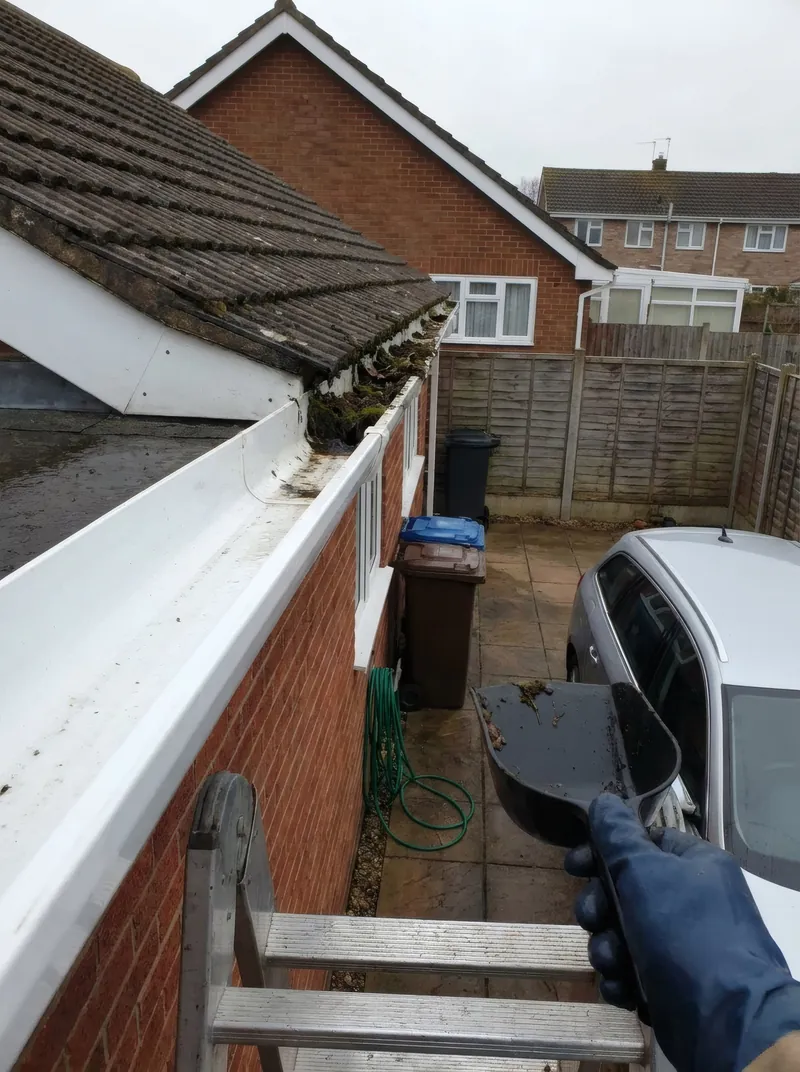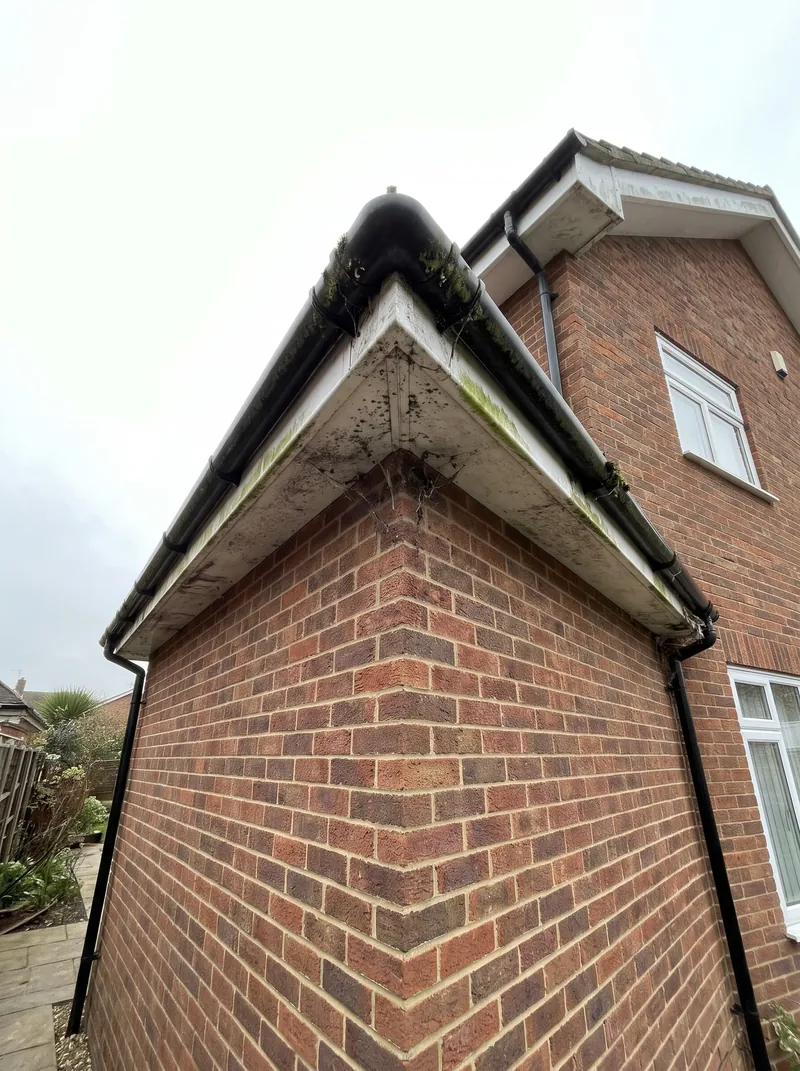
If gutters aren’t cleaned, leaves and silt block them and rain spills over the edge. Over months and years that soaks the wall below, washes mortar out of brickwork, stains render, rots timber fascias, makes paths slippery and can push damp into the house. The gutter itself sags and joints fail under the weight.
What happens first when gutters block?
The outlet fills. Debris washes along the gutter to the lowest point and builds up into a plug. Water backs up and starts going over the front edge in heavy rain. At this stage the gutter may look fine from the ground, and the only sign is water spilling in storms, often at night.
What does overflowing water do to walls?
It soaks the same patch of wall every time it rains. Brick and mortar are porous, and a wall that never dries out properly starts to suffer:
- Mortar washes out of the joints, leaving gaps that need repointing
- Bricks spall in frosty weather, as water in them freezes and pushes the face off
- Render cracks and stains, and can come away from the wall
- Green algae and black streaks grow where the wall stays wet
Repointing or rendering repairs cost far more than gutter cleaning.
Can blocked gutters cause damp inside?
Yes. A wall that stays wet can let damp through to the inside, especially on older solid-walled houses and on cavity walls where debris bridges the gap. Damp shows up as a patch high on an inside wall, peeling paint, mould in a corner or a musty smell. It’s often blamed on condensation or roof leaks when the real cause is an overflowing gutter outside.
What happens to fascias and soffits?
Water running down the fascia board leaves green and black streaks on plastic fascias. On timber fascias, it soaks into the wood. Paint peels, the wood softens and rots, and eventually the gutter brackets lose their grip. Rotten fascias need replacing, which often means taking the gutter down too. Why are fascias and soffits going green?
What happens to the gutter itself?
A gutter full of wet silt is heavy. Brackets bend under the weight, and the gutter sags. A sagging gutter holds water even when cleared, which makes it block faster. In winter, water in a blocked gutter freezes and expands, which can crack plastic and push joints apart. Plants grow in the silt and roots work into the joints.
Eventually sections pull away from the fascia or the seals fail, and the gutter needs repairing or replacing.
What about the ground below?
Overflowing water lands in the same spot every storm. It can:
- Wash soil away from the base of the wall
- Turn paths and patios green and slippery
- Splash mud up the bottom of the wall
- Soak the ground near the foundations
- Pool against the damp-proof course
On clay soils, which are common across south Essex, repeated soaking and drying near foundations isn’t good for a house.
Can blocked gutters attract pests?
Standing water and rotting leaves attract insects in summer. Birds pick through gutters for food and nest material. In some cases, damp, rotting fascias give rodents and insects a way into the roof space.
Can blocked gutters affect the roof?
Water backing up in a full gutter can rise under the bottom row of tiles and run behind the fascia into the roof edge. This is more likely where the gutter sits high or the felt at the eaves has perished. It can lead to rot in the rafter ends.
How long does it take for damage to start?
It varies. A gutter blocked for one winter may cause nothing more than a green stripe. A gutter blocked for several years can cause real damage to brickwork, fascias and inside walls. The longer it’s left, the more it costs to fix.
Does home insurance cover damage from blocked gutters?
Often not. Many home insurance policies exclude damage caused by lack of maintenance, and blocked gutters usually count as that. Check your own policy, but don’t rely on insurance to cover it.
What’s the cheapest way to avoid all this?
Regular gutter cleaning. Once a year in late autumn suits most homes; twice if you have big trees nearby. It costs a fraction of repointing, fascia replacement or damp treatment. See gutter cleaning prices.
What are the warning signs that damage has started?
- Green or black stripes down the wall or fascia
- Mortar that crumbles or has gaps below the gutter line
- Bricks with their faces flaking off
- Peeling paint or soft spots on timber fascias
- A damp patch or mould in an upstairs corner
- A muddy, green or eroded patch at the foot of the wall
Any of these, together with a gutter that overflows, is a strong hint. Clear the gutter first; then let the wall dry out before deciding whether any repair is needed. Often it isn’t, once the water stops.
Is it ever too late to clean the gutters?
No. Even gutters that have been full of plants for years can usually be cleared, as long as they’re still fixed to the house. The camera shows whether the gutter has sagged or cracked under the weight. If it has, we’ll tell you, and clearing it still stops most of the overflow while you arrange a repair.
Do blocked gutters affect a house sale?
They can. Overflow stains, green fascias and plants in gutters are easy to spot from the street, and a surveyor may note them along with any damp they find. It’s a cheap thing to put right before a sale.