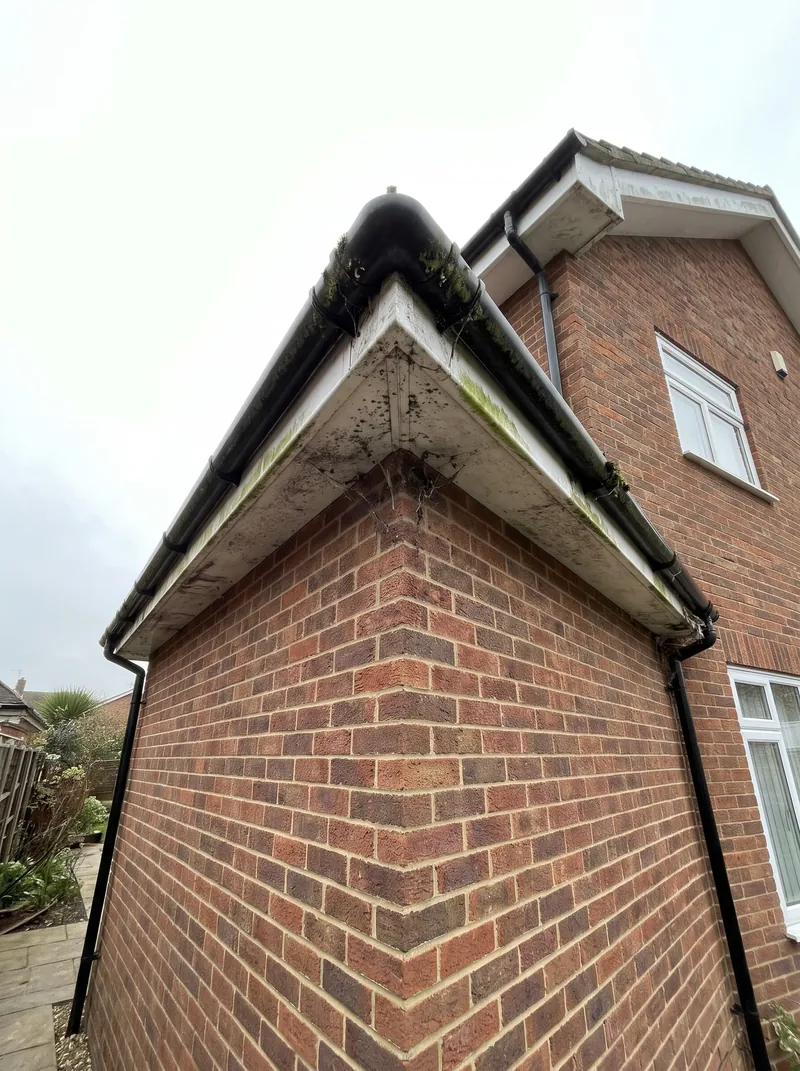
Fascias and soffits go green because algae grows on them. It thrives where the white uPVC stays damp and shaded: north-facing walls, under trees, near the coast and especially below overflowing gutters, where water runs down the fascia every time it rains. Clearing the gutters and washing the boards deals with both causes.
What is the green stuff on my fascias?
It’s algae, a simple plant that grows on damp surfaces. It doesn’t damage uPVC, but it looks bad and gives dirt something to stick to. It often starts as a faint green tinge and turns darker over time. Black streaks are usually dirt carried by water running over the gutter.
Why does it grow on some sides of the house and not others?
Algae needs moisture and shade. North-facing walls get little sun and stay damp longer, so algae grows faster there. Walls under trees, near hedges or facing open fields and marshes also stay damp. South-facing fronts in full sun often stay white for years.
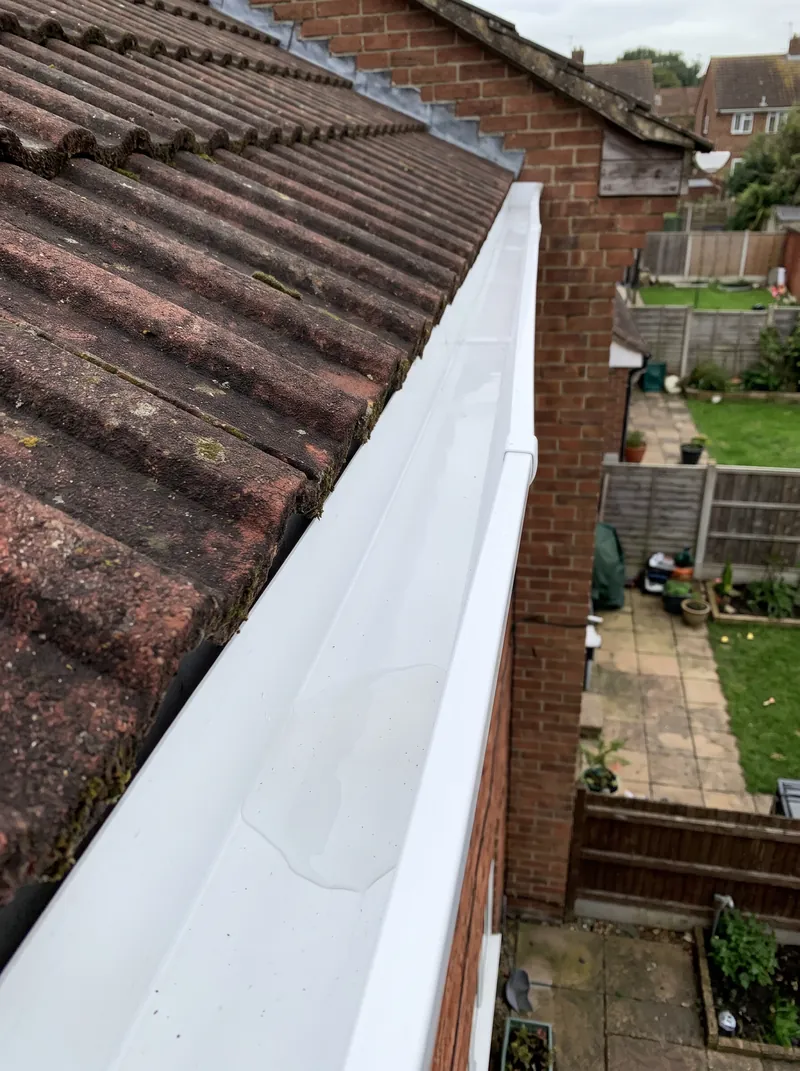
Do blocked gutters make fascias go green?
Yes, a lot. When a gutter overflows, water runs down the front of the fascia every time it rains. That keeps it wet and feeds algae. Green or black stripes below a gutter are a sign of overflow. Clearing the gutter stops the water and slows the green.
Is it worse near the coast?
Coastal homes in Southend, Leigh, Canvey and Clacton get damp sea air and wind. That keeps surfaces moist and carries salt and grit. Algae grows well. Homes near the marshes and estuaries see it too.
Does green on fascias mean they’re damaged?
On uPVC, no, not on its own. On timber fascias, the damp that encourages algae can also rot the wood. If you have painted timber fascias with green growth, check for soft spots and flaking paint.
How are fascias and soffits cleaned?
With soft brushes and water. We use brushes on long poles fed with water, so we can reach two-storey eaves from the ground. The brush loosens the algae and the water rinses it off. Stubborn areas get a second pass. We don’t use harsh chemicals or abrasive pads, which can scratch uPVC. Fascia and soffit cleaning explains more.
Can I clean them myself?
On a bungalow, with a soft brush, warm water and a stable ladder, yes. Don’t lean the ladder on the gutter. For two-storey houses, it’s safer done from the ground. Avoid pressure washers on uPVC, which can force water behind the boards.
Will they stay clean?
For a while. Sunny sides stay clean for years. Shaded sides go green again faster, often within a year or two. Keeping the gutters clear helps most, because it stops water running down the fascia.
Why do soffits get cobwebs and dirt?
Soffits face down, so they’re sheltered from rain. Spiders love them, and dust from roads and drives sticks to the webs. Algae grows on top. A wash clears webs, dirt and algae together.
Should I clean the fascias at the same time as the gutters?
Yes. It’s best value to do both on one visit, and washing the fascia below a blocked gutter only lasts until the next overflow. Clear the gutter first, then wash the fascia.
Does old uPVC look patchy after cleaning?
Sometimes. Very old uPVC can go chalky or yellow in the sun. Washing removes the algae and dirt, but it won’t restore the colour. We’ll tell you before you book if it’s likely.
How long does fascia and soffit cleaning take?
It depends on the size of the house and how green the boards are. On most homes it adds an hour or so to a gutter clean. Very green or very long rooflines take longer, and we’ll tell you before we start.
Can you stop fascias going green again?
Not completely, but you can slow it down a lot:
- Keep the gutters clear, so water stops running down the front
- Trim branches and hedges that shade the roofline
- Have the boards washed before the green gets thick
- Fix leaking joints so water doesn’t drip onto the soffit
Does it matter what colour my fascias are?
White uPVC shows green and grey most. Black, anthracite and woodgrain finishes hide algae better but still collect it, and dirt shows as a dull film. We wash all of them the same way, gently.
Do green fascias affect selling a house?
They’re one of the things that make a house look tired from the street, and they often sit right next to overflowing gutters, which a buyer’s surveyor may mention. A wash and a gutter clear before photos are taken is a small cost for a better first impression.
Are the black streaks the same as the green?
No. Black streaks are usually dirt and pollution carried by water running over the fascia from a blocked gutter, or down from the roof. They bake on in the sun and take more effort to shift. Green is algae. A wash removes most of both; the black is the one most likely to leave a faint shadow on old plastic.
Is green on soffits a sign of damp in the roof?
Not usually. Algae on the outside of the soffit comes from moisture in the air and runoff, not from inside the roof. But if soffits are stained brown, sagging or soft, or there’s a musty smell in the loft, that’s worth having a roofer look at. We’ll mention anything like that we see while we’re washing.